

A “draft paper” has been prepared providing options for consideration by the Western Pacific Regional Fishery Management Council in regards to the Large Vessel Prohibited Area (LVPA) in territorial waters, and the consideration of American Samoa's cultural fishing practices.
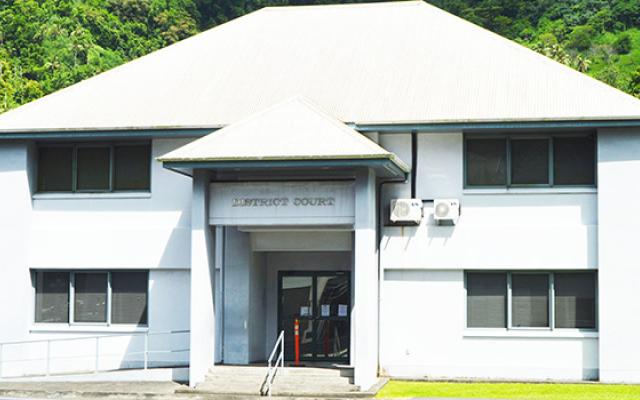
The options, outlined in the draft paper, follows a Honolulu Federal Court ruling in favor of American Samoa, saying that the US National Marine Fisheries Service’s decision in 2016 to reduce the LVPA in territorial waters is invalid, and that NMFS’s adoption of the 2016 LVPA rule, which became effective on Feb. 3, 2016 “was arbitrary and capricious.”
NMFS, as well as Council Executive Director Kitty Simonds, were among the defendants named in the lawsuit filed March last year, by the plaintiff - the Territory of American Samoa - through ASG and the Governor’s Office.
The major focus of the plaintiff’s lawsuit centered around the two Deeds of Cession — 1900 Deed of Cession for Tutuila and Aunu’u, and the 1904 Deed of Cession for the Manu’a islands — with the United States.
In her March 2017 ruling, US District Court Judge Leslie Kobayashi said the Deeds preserved the American Samoans’ right to use their “property” to continue their customary practices, although the Deeds do not specifically identify those customary practices. Kobayashi said the court concluded that the Deeds of Cession require the United States to preserve American Samoan cultural fishing practices.
The federal defendants have since filed a motion for reconsideration, or in the alternative, remand the NMFS’ 2016 Rule - reducing the LVPA from 50 to 12 miles - back to NMFS for consideration of cultural fishing practices.
However, ASG has strongly objected to the defendants’ motion, arguing that the Court was right in its decision.
Prohibiting longline vessels — 50 ft and larger — from fishing within the LVPA (50 miles from the shores of the territory) was implemented in 2002 to help the locally based 'alia fishing fleet. The court’s decision would remove the 2002 prohibition.
According to the “draft paper” which was part of this week’s meeting in Honolulu of the Council’s Scientific and Statistical Committee, the Council — at its 170th meeting next week in Honolulu — needs to consider for initial action two categories of issues:
• Should the Council take new action on the LVPA regulations to address unnecessary measures that are contributing to inefficient operations by the American Samoa longline fishery;
• If the Council determines that new action on the LVPA is warranted, then: the Council should define cultural fishing in American Samoa; and any approved action should protect and preserve cultural fishing.
CULTURAL FISHING
According to the “draft paper,” ethnographic research conducted in American Samoa recognizes the ongoing social and cultural importance of fishing and seafood availability to American Samoan life.
For example, a high chief in American Samoa is attributed to saying that “fish is culture” and that the primary motivation for fishing in American Samoa is cultural rather than commercial.
“The importance of cultural fishing practices is not unique to American Samoa, but similarly held among indigenous island communities throughout the Pacific,” the draft paper notes. “Fisheries sustained human habitation on Pacific Islands for several millennia, supporting the development of various island-based cultures. Thus, fishing is inextricably linked to Pacific Island culture.”
It also says that available research on cultural fishing has not asked whether large-scale fishing such as purse seine or longline fishing would constitute cultural fishing. However, it is believed that commercial longline fishing by 'alia vessels involves aspects of cultural fishing.
The draft paper also gave background information on the American Samoa longline limited entry federal program established in 2006 that created 4 vessel permit size classes, with the A Class reserved for vessels under 40 ft.
After the initial permit issuance, the program allowed for A class permit holders to trade in their permits for permits associated with larger vessels (e.g. C or D class; 50 ft-70 ft or greater than 70 ft, respectively). There were several instances where indigenous American Samoa owners of Class A vessels acquired permits for larger vessel through this mechanism.
Based on Kobayashi’s ruling, the draft paper says the Council and NMFS need to define American Samoa cultural fishing to protect and preserve it in the context of continued fisheries management.
In doing so, there are many questions to consider, according to the draft paper, which goes on to list some of the questions:
• Assuming 'alia longline fishing targeting albacore for local cannery markets involves cultural fishing, does cultural fishing also include fishing with larger vessels owned or operated by indigenous American Samoans?
• Does it matter whether the participants are indigenous American Samoans, assuming the vessel engages in customary fishing practices?
• Should cultural fishing involve only traditional fishing gear and methods, and if so, from what time period (e.g. pre-Western contact)?
• Can cultural fishing evolve and involve the use of modern techniques and technology?
• Should the definition of cultural fishing consider the disposition of the catch?
• Is cultural fishing only limited to subsistence use and community sharing, or can it include commercial sales?
• Assuming the Council and NMFS define cultural fishing, what does it mean to protect and preserve cultural fishing?
• Does it mean there can be no competition with other fishery sectors, or is it enough that the Council action provide continued access and opportunity to engage in cultural fishing?
“Such questions are not exhaustive and need to be addressed through a Council-led process that engages the public, local fishing community, American Samoa Government, and the Council’s advisory panels and committees,” the draft paper suggests.
(More on the 'draft paper' in Monday's edition).
Comments
Sorted by BestComments are powered by Disqus. By commenting, you agree to their privacy policy.
Powered by Disqus