
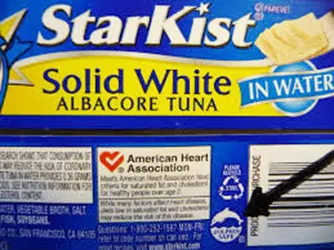
Pago Pago, AMERICAN SAMOA — StarKist Co., is facing a new civil lawsuit, and this time, a “class action complaint” filed at the federal court in San Francisco, alleging — among other things — that the company violated the Racketeer Influenced and Corrupt Organizations Act (RICO) and misled consumers that its canned tuna products are “dolphin-safe”.
“RICO co-conspirator StarKist Samoa and its employees — among other third party importers and employees unknown to Plaintiffs — imported defendant’s tuna products for sale, knowing that defendant would market and sell its tuna products to plaintiffs and the Class [Action] as dolphin-safe, sustainably sourced, and compliant with federal laws and regulations,” the 87-page complaint alleges.
Filed early this week by 16 US consumers, on behalf of themselves and all others similarly situated, the complaint outlined in detail eleven specific alleged violations of federal and state laws (in the US) by StarKist, which is based in Pittsburgh, Pennsylvania, with facilities in American Samoa and Ecuador.
Since 1990, StarKist, which is today the #1 seller of prepackaged tuna brand in the US, had promised consumers that its tuna is “Dolphin- Safe”, the complaint states.
However, according to the complaint, StarKist’s tuna has not been “Dolphin-Safe” since the introduction of the dolphin-safe policy in 1990, including the last 4 years — the “Class Period”, and StarKist processes much of the tuna it sold during the Class Period in Pago Pago, American Samoa, for shipment to the U.S.
The complaint alleges that during the time period relevant to plaintiffs’ claims, StarKist produced and sold canned tuna and tuna pouches throughout the United States and its territories, sold canned tuna and tuna pouches to plaintiffs and others in the U.S, “and engaged in false, misleading, and deceptive advertising.”
“The scheme continues to this day, as consumers, retailers, and federal regulators remain in the dark about the truth of defendant’s so-called Dolphin Safe tuna products,” allege the plaintiffs.
STARKIST RESPONSE
Responding to Samoa News request for comments, StarKist says it does not comment on pending legal matters. However, a StarKist statement provided to Samoa News yesterday through a company spokesperson, says the company “is committed to protecting the dolphins and was the first company to adopt a dolphin-safe policy in April 1990.”
“We are proud to share with you our worldwide policy to save dolphin lives,” said the statement. The policy states:
• StarKist will not purchase any tuna caught in association with dolphins. StarKist continues its practice of refusing to purchase tuna caught with gill or drift nets, which are known to be dangerous to many forms of marine life. StarKist condemns the use of these indiscriminate fishing methods that trap dolphins, whales, and other marine life along with the intended catch of fish.
• StarKist was the first major American tuna canning company to make this commitment to the public. We remain committed to this policy and require certification that all tuna we purchase is dolphin-safe. Our dolphin-safe policy includes StarKist tuna, as well as all of our branded and private label products. StarKist tuna is labeled with a special "Dolphin-Safe" logo.
OTHER DOLPHIN-SAFE ISSUES
Plaintiffs allege that the defendant “falsely represents” that StarKist tuna products are dolphin-safe – meaning “no” dolphins were killed or seriously injured – when Defendant’s tuna fishing practices kill or harm substantial numbers of dolphins each year.
“And because defendant does not adequately trace or otherwise identify the tuna that is not dolphin-safe and physically segregate and store it separately from any tuna that may be dolphin-safe, defendant may not label any of its products as dolphin-safe,” the complaint says.
It adds that StarKist is not among the tuna companies, that use only dolphin-safe pole-and-line or trolling techniques to capture their tuna. Rather, the fishing vessels that supply StarKist’s tuna use indiscriminate fishing methods that kill and harm a substantial numbers of dolphins.
For example, during the Class Period, StarKist sourced much of its tuna from vessels operated by Imperial Shipping Logistic Co. Ltd. And those vessels routinely used longlines — which consist of a 40-80 mile long main line to which many smaller branch lines with baited hooks are attached — to catch tuna.
“Longlines are highly indiscriminate fishing gear as they attract large numbers of target and non-target fish, as well as dolphins, that get snagged on the hooks by their mouth or other body parts when they go after the bait and then remain on the line for extended periods of time as the lines are drawn in to the vessel and the catch is obtained,” the plaintiffs state.
According to the complaint, tuna-fishing techniques that meet the “dolphin-safe” standards — not used by defendant and its RICO co-conspirators — are more expensive than other techniques.
“Consequently, Defendant and its RICO Co-Conspirators’ bottom lines are greatly increased by the indiscriminate killing and harming of dolphins while fishing for tuna.”
Other alleged co-conspirators identified in the complaint include Dongwon Industries — the South Korean based owner of StarKist — which also uses Dongwon owned fishing vessels for fish supply.
The plaintiffs claim that almost all of Dongwon’s distant water boats are purse seiners whose nets, which can reach more than 6,500 feet in length and 650 feet deep — the equivalent of 18 football fields by 2 football fields — often entrap dolphins when drawn closed, particularly because many of the purse seine fishing vessels use free floating rafts of flotsam known as fish aggregating devices, or FADs, to capture tuna.
Samoa News notes that similar lawsuits were also filed at the San Francisco federal court against the nation’s other two major tuna producers, Bumble Bee and Chicken of the Sea International.
Comments
Sorted by BestComments are powered by Disqus. By commenting, you agree to their privacy policy.
Powered by Disqus