
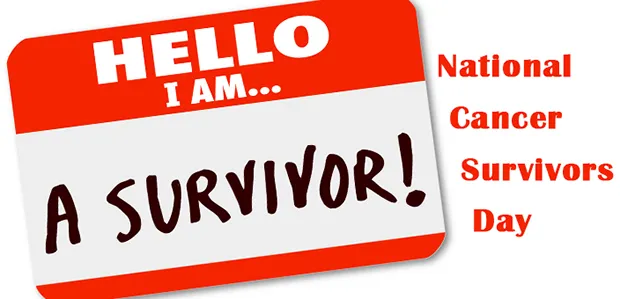
Pago Pago, AMERICAN SAMOA — On June 3, the nation will celebrate National Cancer Survivorship — a celebration of life honoring patients fighting this disease.
Look out for local events being held to recognize cancer survivors and be sure to honor your loved ones fighting cancer. They deserve our respect and compassion for getting through each day. The next time you’re in a room of people keep in mind: one in three adults will develop cancer — “Never say never.”
WHEN NEVER ARRIVES
“It’s a cancer, but we need to do further testing to determine what kind of cancer.” This Samoan cancer survivor, “never expected to hear those words.”
As she listened to the doctor on the other end of the phone, she smiled across the table at her mother, trying not to let on that she was hearing this devastating news. After weeks of testing at the Tripler Army Medical Center in Honolulu, Hawai’i, the doctors confirmed that she had nasopharyngeal cancer which had spread to multiple organs resulting in a Stage 4 diagnosis.
Nasopharyngeal cancer is a rare head and neck cancer.
The National Cancer Institute defines ‘rare cancer’ as having less than 15 cases per 100,000 people. The national incidence rate, 2009-2013, for nasopharyngeal cancer is .7 out of 100,000. Amongst Asian/ Pacific Islanders the rate is 3.1 – a significant difference: six times that of all other ethnicities.
In American Samoa, the A.S. Community Cancer Coalition has provided stipends to four patients with nasopharyngeal cancer since 2014 with an average patient age of 44 compared to a U.S. national median of 56 between 2010-2014.
The nasopharynx is located in the upper throat, behind the nose at the base of the skull, above the roof of the mouth. A breath of air flows into the throat and nasopharynx and into the lungs. You are more likely to develop this type of cancer if you are Asian, male, eat lots of salt-cured fish and meats (including sandwich meats), have a family history of cancer, smoke, drink a lot of alcohol, work around wood dust or formaldehyde, or have come into contact with the Epstein-Barr Virus.
Symptoms include a lump in the neck (most common), blurry vision, chronic ear infections, nosebleeds and sore throat; face pain or numbness, hearing loss and ringing in the ears.
Obviously, these symptoms are similar to various health problems ranging from the flu to other types of cancers. The key is to investigate unusual signs of health issues, listen to and act on your instincts, in order to find the problem early enough to experience a better outcome from treatment.
She was an active, 51-year old self-proclaimed workaholic with aspirations to become a medical doctor and give back to her Samoan community.
She still is.
The only difference is that fighting the cancer has taken center stage in life, with everything else following up behind and attended to, as she is physically able to do them. She maintains a perceptive sense of humor, has learned to be patient with the side effects, and cultivates her spiritual faith in healing, gratitude, and hope.
Diagnosed in 2016, she worked with a team of healthcare providers including a radiology oncologist for radiation treatment, an oncology doctor for chemo-therapy, nutritionists, audiologists, pharmacologists, speech pathologists and even a mental health psychiatrist.
Cancer affects all aspects of the patient’s life so there is a healthcare provider for each area, including a palliative care specialist as a result of her Stage 4 diagnosis.
She describes one of her treatment experiences:
“For radiologic treatment, I was prepped to be fitted for a mask that would cover my entire face and shoulders. The mask was a hardened plastic material that softened once placed in warm water then placed on a patient’s face and shoulders to mold the plastic. The fitting had to be precise and secure. I developed a case of claustrophobia and had to take anti-anxiety medication to endure the treatment sessions.”
The radiology and chemo-therapy were ‘harsh and toxic’. She experienced ‘extreme fatigue, nausea, vomiting, difficulty eating and swallowing, and as swollen thyroid’ among other side effects. She visited the ER regularly for IV fluids and describes ‘many dark days’ through which she emerged stronger after immersing herself in spiritual and faith building exercises.
While she enjoyed the support of family and friends, she admits that at times it was very difficult to tolerate visits: “When you’re told you have cancer I found that I didn’t have the energy to visit with family. They are affected emotionally too and may do not understand the importance of exercising emotional control when visiting the cancer patient because the patient simply does not need the additional emotional stress or have the energy to respond to a distraught family member. It is important for the patient to be focused on daily activities to progress towards healing.”
She is also quick to acknowledge that a strong support system is critical to healing as well.
In March 2017 she found that the original tumor was gone, but cancer cells had settled in her liver and bones. She immediately began immunotherapy.
By October all the cancer cells in the bone and liver were gone, but more cells had developed in her stomach and under her liver. Without hesitation, and with high hopes, she took a stronger immunotherapy drug from October through December 2017.
Unfortunately, in January of 2018 doctors found that the cells were not responding to the new treatment. She returned home to Tutuila for some needed rest, flying back to Hawai’i for a new treatment in April.
She reflects on her experience over the past two years.
“As I went through my journey I was simply amazed at the number of Samoans afflicted with cancer. This journey is a financial hardship, and emotionally debilitating if there is no support system in place to guide and advise families and affected loved ones.
“Sadly, when cancer patients travel off-island, American Samoa is not aware of why they left, the results of their treatment, what kind of cancer they had, what stage they were in. Currently there is no functional consolidated repository tracking this valuable data which is critical to compile justification for funding sources that could address cancer on-island.”
This survivor and advocate joins the voices of hundreds, perhaps thousands, of American Samoans demanding better cancer healthcare in the Territory, and a coordinated support system to help patients get off-island and access care.
Cancer is a personal disease. It grows differently in each person so there is no standard treatment.
A treatment program is designed specifically for the bio-markers, health status, cancer type and growth rate of the patient — a patient doesn’t simply ‘get chemo’.
Cancer treatment for a single patient can add up to a minimum of hundreds of thousands of dollars. Establishing cancer treatment in the Territory is not an option but establishing an effective hospital-based referral and case management program is. With a program like this we could see the number of American Samoan cancer survivors improve dramatically.
Comments
Sorted by BestComments are powered by Disqus. By commenting, you agree to their privacy policy.
Powered by Disqus