
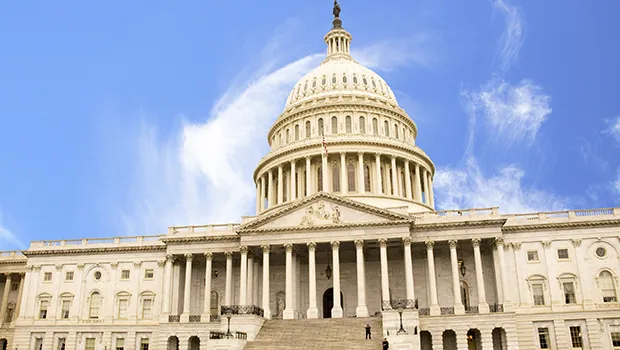
Washington, D.C. — A US Coast Guard vessel for border protection, extending a federal tax credit to benefit the canneries, federal cabotage policy and education improvements are among other priorities that American Samoa shared — via a written statement from Gov. Lolo Matalasi Moliga — with the US Senate Committee on Energy and Natural Resources that convened a hearing on Tuesday on the state of US insular areas.
COAST GUARD VESSEL
“Homeland security is very important given that American Samoa is the only US Territory in the South Pacific with its neighbor welcoming the influx of the Chinese,” Lolo said in a prepared 7-page statement to the Senate Committee, as he wasn’t able to make it to D.C. for the hearing.
The governor points out that Coast Guard currently has no vessel assigned to American Samoa “to patrol our ocean borders” and as a result this responsibility falls to the local government to perform this function.
“We are hopeful that Congress will provide funds for the purchase and operation of a Coast Guard vessel to patrol our borders to stop drug trafficking, money laundering, smuggling of alcohol and tobacco,” he said. “It is estimated that the cost of such vessel is $5 million.”
VETERANS CLINIC
“It is our hope that Congress will authorize and appropriate funds for construction and operation of a US Department of Veterans Affairs healthcare facility in American Samoa to fully address the healthcare needs of our veterans who must now travel to Hawai’i to meet these needs,” he said.
FEDERAL CABOTAGE
“Unfortunately, and regrettably’ the application of the federal ‘cabotage’ policy to American Samoa has effectively neutralized our attempts to develop tourism as one of our economic pillars,” he said.
He explained the limited flights between the territory and Hawai’i as well as the cost of airfares — for example, one-way fare is from $500 - $800 and could reach $1,200 for a last-minute purchase.
The Committee chairwoman, Sen. Lisa Murkowski is from Alaska.
“With all due respect, Madame Chairwoman, and as you are well aware, American Samoa’s air transportation challenges are far worse than those existing in the great State of Alaska, which is exempted from the Cabotage policy,” Lolo said.
“We earnestly and humbly ask that Congress grant American Samoa a waiver from the cabotage policy,” he added.
Cabotage policy bars foreign air carriers from carrying passengers and cargo between one US airport and another US airport. The Lolo Administration, as well as previous governors has made the same request over the years to the US government for cabotage exemption, which they have argued will help boost tourism development here.
FEDERAL TAX EXTENDER
The governor notes that economic diversification is the key to American Samoa’s economic and financial stability and “we are taking steps to realize this vision”.
“One important way to make this vision a reality is to extend — and make permanent – the American Samoa Economic Development Credit, known as 30(A), [which] will help attract new businesses to the island, as companies will be incentivized to invest in American Samoa,” he said.
He reminded the committee of the challenges faced by StarKist due to among other things, federal policies such as the automatic imposition of the federal minimum wage escalation, removal of federal incentive programs such as the 30(A) tax credit, IRC Section 936, shrinking fishing grounds for the US Fishing Fleet, and the added financial cost attributed to regulatory assessed penalties.
EDUCATION IMPROVEMENTS
“Education is crucial to the future of American Samoa and I am not ashamed to say that our students’ reading and writing skills are three to four grades behind their Hawai’i and mainland counterparts,” said Lolo.
He explained that English is a second language to 90% of the local student population thus comprehension and analytical skills are a challenge, as well, which consequently demands smaller classes sizes and a well-trained cadre of teachers.
And while additional classrooms have been constructed, repair of some existing done, additional funds, estimated at $2 million, are needed to accelerate the construction of new classrooms, provide training for teachers, and apply required maintenance to old buildings to prolong their useful lives.
He further noted, “mindful of the natural athletic aptitude of our young men and women along with the need to combat the threat of obesity among our young people,” they have “started investing in the construction of gymnasiums so year-round athletic activities are made possible.”
“It is estimated that $5 million is needed to construct gymnasiums for elementary schools with 1,000 or more enrollment,” he said.
Comments
Sorted by BestComments are powered by Disqus. By commenting, you agree to their privacy policy.
Powered by Disqus